
Missing Middle Housing: Why BC Needs It Now
Between single-family homes and high-rise towers, there is a housing gap that has starved Metro Vancouver of attainable homes for decades. Multiplexes fill that gap — and the numbers prove it.
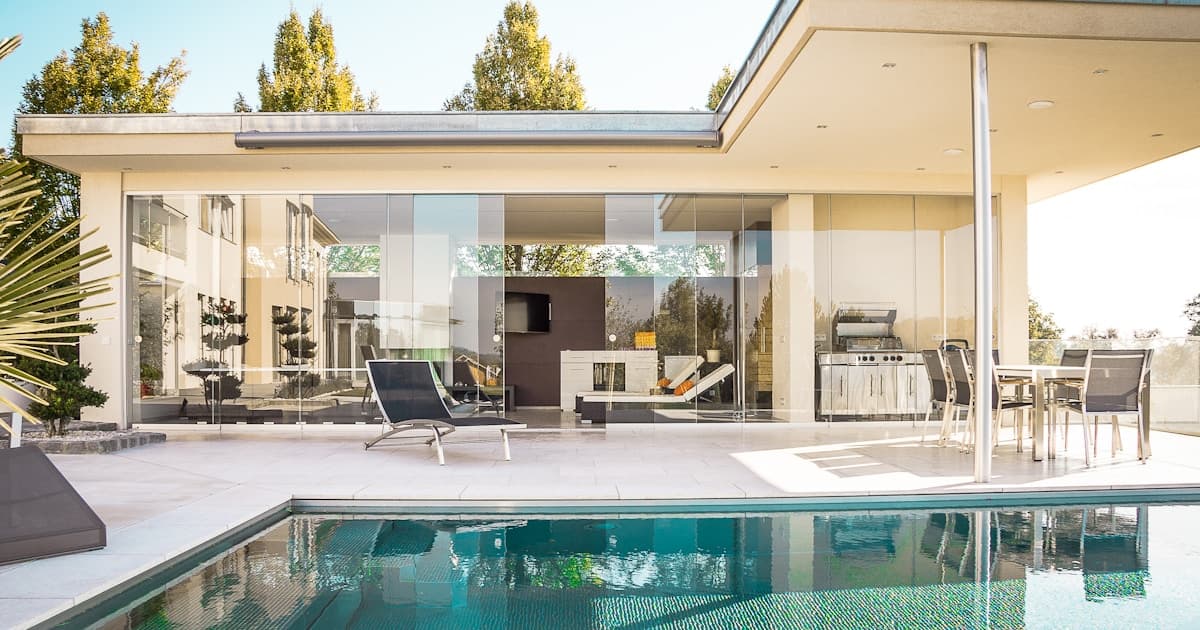
Drive through any Metro Vancouver neighbourhood built before 2000 and you will see the same pattern: single-family houses on one side of the arterial, concrete towers on the other, and almost nothing in between. That gap — the “missing middle” — is the single biggest structural problem in BC's housing market.
What Is Missing Middle Housing?
Missing middle refers to housing forms between a detached house and a high-rise apartment: duplexes, triplexes, fourplexes, sixplexes, townhouses, and courtyard apartments. These building types were common in North American cities before World War II. Post-war zoning effectively banned them in most residential neighbourhoods, reserving those areas exclusively for single-family homes.
The result: in Burnaby, roughly 55% of residential land is zoned exclusively for single-family use. In Surrey, it is closer to 60%. That land houses 15–20% of the population while consuming over half the serviced residential area. The math does not work when your region needs to absorb 35,000+ new residents per year.
Why Towers Alone Cannot Solve the Crisis
High-rise development adds density, but it comes with limitations. A 30-storey tower in Metrotown takes 4–6 years from land assembly to occupancy and requires $150M+ in capital. It produces 200–400 units, almost all of which are one and two bedrooms. Families need ground-oriented housing with three bedrooms, private entrances, and small yards — and towers do not deliver that at scale.
Multiplexes do. A 6-unit infill project on a former single-family lot takes 18–24 months from permit to occupancy, requires $2.5–3.5M in capital, and produces family-sized units with direct street access. Scale that across 5,000 eligible lots in Burnaby alone, and you are talking about 20,000–30,000 new homes — without rezoning a single parcel.
The Economics of Gentle Density
Missing middle housing is efficient on every metric that matters. Infrastructure cost per unit is 40–60% lower than greenfield suburban development because the roads, sewers, water mains, and transit routes already exist. Construction cost per square foot is 25–35% lower than concrete high-rise because multiplexes use wood-frame construction. And the sale price per square foot is 15–25% below equivalent new condo product because there are no amenity fees, strata management overhead, or tower premium markups.
For a buyer, that translates to a new 1,200 sq ft three-bedroom multiplex unit in Burnaby at $850,000–$950,000, compared to $1.1M–$1.3M for a comparable new condo with strata fees of $400–600/month on top. The value proposition is clear.
What Bill 44 Changed
BC's Bill 44, passed in November 2023, was the provincial government's response to decades of missing middle obstruction at the municipal level. It requires all municipalities over 5,000 population to allow 3–6 units on most single-family lots as of right — no rezoning required. This was not a suggestion. It was a mandate, and it removed the single biggest barrier to missing middle construction: political risk at the municipal level.
Before Bill 44, a developer proposing a fourplex in an RS zone faced a public hearing where 30 neighbours could show up and kill the project. Now, that fourplex is a permitted use. The neighbours can still comment on design, but they cannot veto the density.
Where the Opportunity Is Greatest
The best missing middle opportunities in Metro Vancouver are in established neighbourhoods with three characteristics: (1) land prices under $250/buildable sq ft, (2) strong end-sale values above $750/sq ft for new construction, and (3) proximity to transit corridors that unlock 6-unit density. In practical terms, that means Burnaby south of Kingsway, parts of New Westminster, Surrey's Fleetwood and Guildford corridors, and Coquitlam's Lougheed and Austin Heights areas.
Fort Property Developments focuses exclusively on these corridors. Every lot we assess is screened against these fundamentals before we commit capital. The missing middle is not just a policy talking point — it is the most compelling real estate development opportunity in BC right now.
Have Questions About This Topic?
Ask Dennis AI for deeper answers on zoning, feasibility, or the development process — or run your lot through the calculator.
More Insights
BC Bill 44: What It Means for Your Single-Family Lot
BC's new small-scale multi-unit housing legislation now allows 3-6 unit multiplexes on most single-family lots province-wide. Here's what that means for property owners in Metro Vancouver and the Fraser Valley.
Read article →
Multiplex ROI in Metro Vancouver: What Returns Can You Expect?
We break down a real-world pro forma for a 6-unit infill project in Burnaby — land cost, hard costs, soft costs, and the returns that make the deal pencil.
Read article →
Is Your Lot Eligible for a Multiplex? A BC Owner's Checklist
Not every single-family lot is a good multiplex candidate. Lot size, topography, boulevard trees, FSR limits, and zoning overlays all affect feasibility.
Read article →
Fourplex vs Sixplex: Which Build Makes More Financial Sense?
More units means more revenue — but also more complexity and cost. We compare the real numbers on 4-unit vs 6-unit multiplex builds to help you decide which path fits your lot and your budget.
Read article →