
Fourplex vs Sixplex: Which Build Makes More Financial Sense?
More units means more revenue — but also more complexity and cost. We compare the real numbers on 4-unit vs 6-unit multiplex builds to help you decide which path fits your lot and your budget.
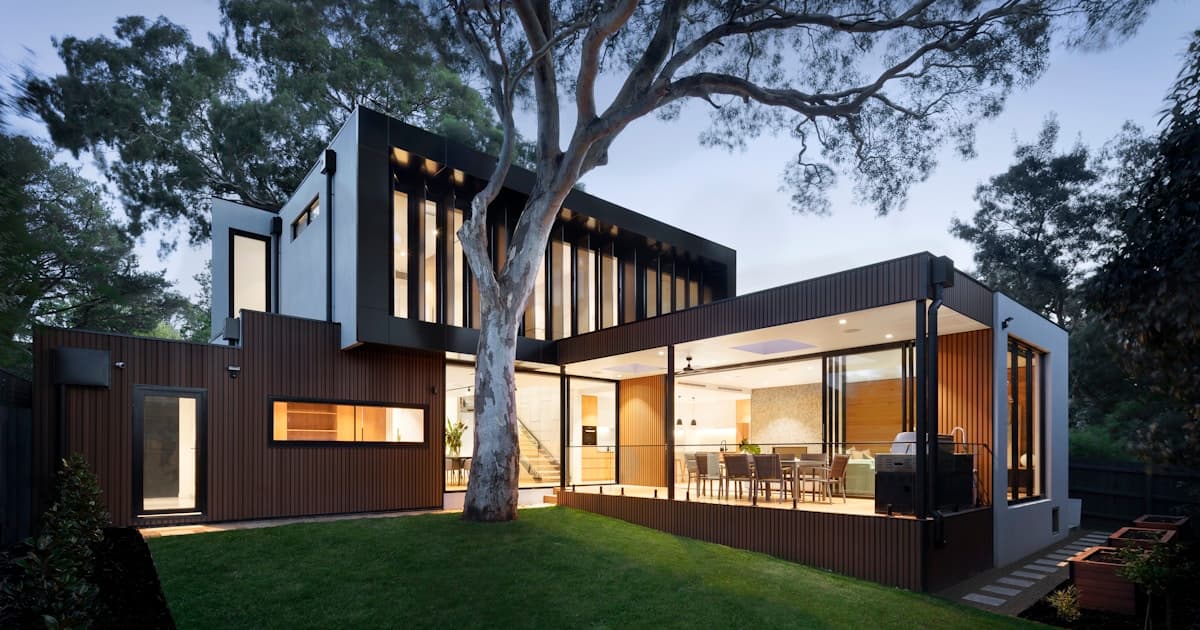
When BC's Bill 44 opened up multiplex development, property owners immediately asked: should I build four units or six? The answer depends on your lot, your location, and your tolerance for complexity. Here is how the two options compare on the metrics that matter.
The Zoning Threshold
Under Bill 44, most single-family lots allow 4 units as of right. To get 6 units, your lot typically needs to be within 400 metres of a frequent transit corridor (bus routes with 15-minute service or better, or a SkyTrain station). Not every lot qualifies for 6. Check your municipality's transit proximity map before assuming you can build more than 4.
Lot size also matters. Most municipalities require a minimum of 450–500 m² for 6 units. On a standard 6,000 sq ft (557 m²) lot, you are fine. On a narrower 4,500 sq ft lot, 6 units may not be physically possible even if zoning permits them.
Comparing the Pro Formas
Side-by-Side — Same 6,000 sq ft Burnaby Lot
Why the 6-Unit Numbers Look Better
Land cost is fixed regardless of unit count — you are buying the same lot. That means every additional unit spreads the land cost thinner. On a $1.2M lot, land cost per unit drops from $300,000 (4-unit) to $200,000 (6-unit). That $100,000 per unit difference flows straight to margin.
Hard costs do increase — roughly 40–45% more construction for 50% more units — but the increase is not proportional because the foundation, servicing, and site prep costs are largely fixed. You are adding floor area, not starting from scratch.
When a Fourplex Makes More Sense
Not every project should be a sixplex. A fourplex is the better play when: (1) your lot does not qualify for 6 units under transit proximity rules, (2) the lot is narrow or irregular and cannot physically accommodate 6 units within setback requirements, (3) you want larger units (1,200–1,400 sq ft three-bedrooms) that command premium per-unit pricing, or (4) your capital is limited and you want a simpler, lower-risk first project.
Fourplexes are also faster to permit and build. Less complexity in structural engineering, simpler fire separation requirements, and fewer units to coordinate through the sales process. For a first-time multiplex developer, starting with a fourplex and scaling to sixplex on the second project is a smart approach.
The Fort Recommendation
Build the maximum units your lot supports within the zoning envelope. If you can get 6, build 6 — the economics are meaningfully better. If your lot supports 4, build 4 — the deal still works on well-selected sites. The mistake is building fewer units than your lot allows. Every unit you leave on the table is $100,000+ of margin you are walking away from.
Run your specific lot through our feasibility calculator, or book a free 20-minute lot assessment. We will tell you whether you are looking at a 4-unit or 6-unit site, and what the numbers look like either way.
Have Questions About This Topic?
Ask Dennis AI for deeper answers on zoning, feasibility, or the development process — or run your lot through the calculator.
More Insights

BC Bill 44: What It Means for Your Single-Family Lot
BC's new small-scale multi-unit housing legislation now allows 3-6 unit multiplexes on most single-family lots province-wide. Here's what that means for property owners in Metro Vancouver and the Fraser Valley.
Read article →
Multiplex ROI in Metro Vancouver: What Returns Can You Expect?
We break down a real-world pro forma for a 6-unit infill project in Burnaby — land cost, hard costs, soft costs, and the returns that make the deal pencil.
Read article →
Is Your Lot Eligible for a Multiplex? A BC Owner's Checklist
Not every single-family lot is a good multiplex candidate. Lot size, topography, boulevard trees, FSR limits, and zoning overlays all affect feasibility.
Read article →
Missing Middle Housing: Why BC Needs It Now
Between single-family homes and high-rise towers, there is a housing gap that has starved Metro Vancouver of attainable homes for decades. Multiplexes fill that gap — and the numbers prove it.
Read article →